
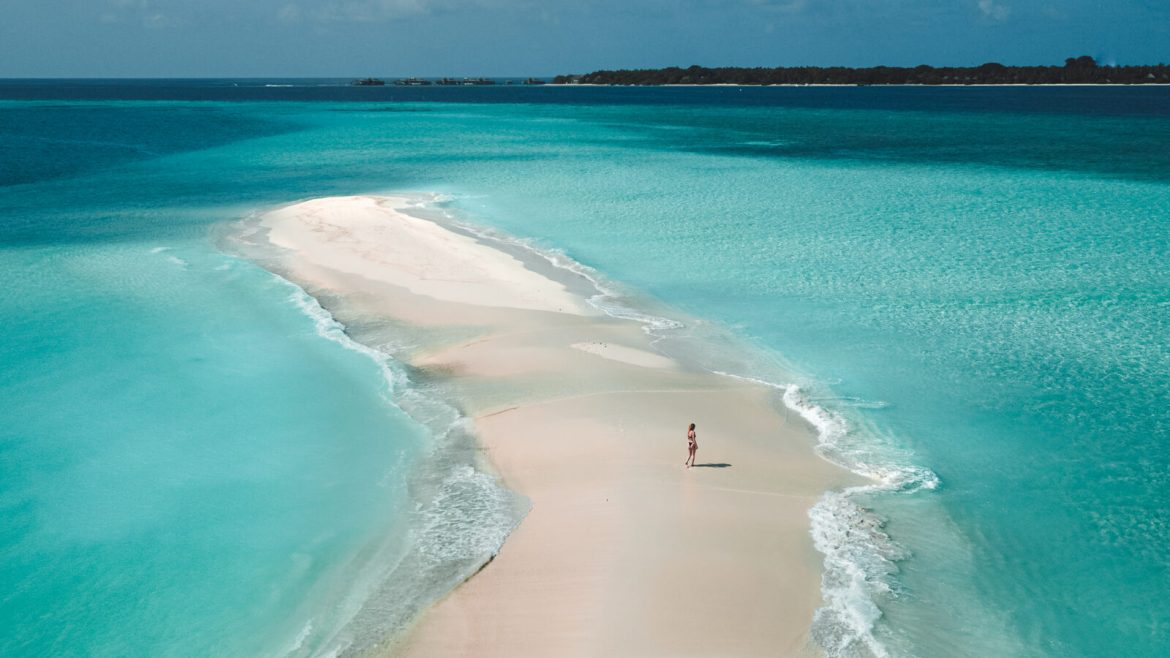
Soneva Fushi has never tried to compete on spectacle. Its luxury is quieter, more instinctive, and deliberately unpolished at the edges. This is a place built around barefoot living, reconnection, and a certain romantic idealism that runs through everything—from its architecture to the pace of a guest’s day. Watersports at Soneva Fushi follow that same philosophy.
Soneva Fushi is not trying to be a high-performance watersports destination in the conventional sense. It is trying to offer playful, beautiful access to the water, framed by one of the most naturally stunning settings in the Maldives where the house reef sits a mere twenty meters off the beach.
Few resorts can match Soneva Fushi for sheer natural presence. The lagoon is perfect for paddle sports and snorkelling, offering sheltered access to an unmistakably exceptional marine playground. Kayaks, stand-up paddleboards and snorkelling excursions feel entirely in harmony with the environment and hassle-free. The water invites slow exploration rather than speed, typically aided by a gentle current to save you the effort of swimming, and this is where Soneva’s watersports offering feels most complete.
Staff are capable, calm, and well aligned with the brand’s ethos. There is no rush, no hard sell, and no attempt to turn activities into tightly scheduled products. Guests drift down to the watersports centre when they feel like it, and sessions tend to unfold organically.
One of Soneva’s most charming touches is its boat naming convention. Every vessel carries a variation of “Ever Soneva”, a nod to founders Sonu and Eva Shivdasani and the fairytale romance that underpins the entire brand. It’s a small detail, but one that encapsulates Soneva’s approach: personality and narrative over polish.
That philosophy, however, becomes more complicated when applied to motorised watersports.
Wakeboarding at Soneva Fushi is enjoyable, particularly for recreational riders, but it is not a performance-driven setup by any means. The boats traditionally used are not dedicated ski boats, instead relying on large outboard configurations that prioritise versatility over wake quality. For experienced riders, this results in a less defined wake, rough pull, and a setup that requires compromise and to accept the overarching goal of the watersports offering. This can be hard to remember when the handle is yanked around and the boat is driving on a gentle turn the whole time.
Equipment reflects a similar reality. Maintenance is fine and safety standards are met, but the inventory is limited. Guests typically choose from a small selection—around three boards or skis—and serious riders almost always bring their own equipment. This is common at many ultra-luxury resorts, but at Soneva the contrast between the price point and the technical offering is particularly noticeable. Regular guests have developed the catch-phrase ‘Soneva++’, to represent the tax that applies to all paid activities. This can make the cost-quality balance of towed watersports hard to justify for waterski enthusiasts.
That said, Soneva is acutely aware of this gap. After KSL Capital Partners (a real estate private equity firm headquartered in Denver, Colorado) bought a majority stake in Soneva Group in 2025, there may be an opportunity to upgrade the out-of-date ski boat. Time will tell whether this happens and whether it can drive a quality transformation that attracts enthusiastic waterskiers.
It will be interesting to see if and how Soneva integrates a more performance-oriented asset into a brand that traditionally avoids overt displays of machinery and gloss. If done thoughtfully, it could mark a genuine evolution.
Sessions at Soneva Fushi are intentionally unstructured. There is no formal coaching programme, no rigid time slots, and no sense of progression pathways. You turn up, get on the water, and ride. For some guests—particularly families and those seeking freedom from schedules—this is exactly the point.
For experienced riders used to dialled-in sessions, it can feel a little loose. Speeds, rope lengths and preferences are accommodated, but the approach is reactive rather than methodical. You will have to ask. Then remind. And perhaps remind again. This isn’t a criticism so much as an observation: Soneva’s watersports are designed to fit around a guest’s day, not define it.
Where Soneva Fushi excels without question is fun. Tubing is unapologetically full-throttle. The team don’t hold back, and it’s consistently one of the most enjoyable activities for guests of all ages. It feels uninhibited and refreshingly unconcerned with refinement. This is one area that Soneva gets right to the joy of its younger clientele.
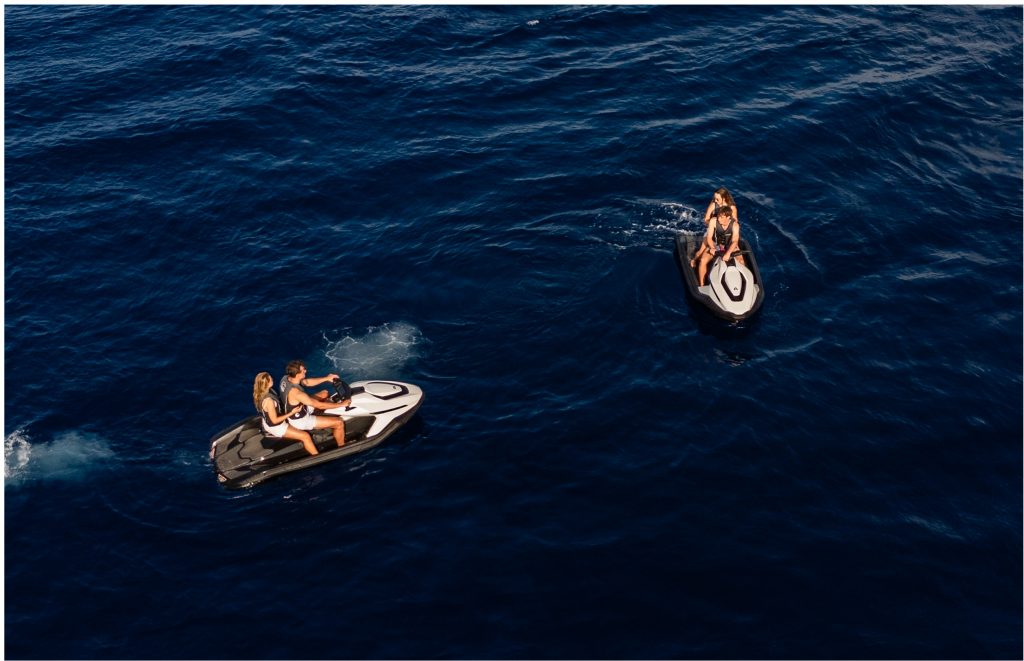
E-jet skiing fits neatly into the brand’s sustainability narrative, offering a quieter, lower-impact way to explore the lagoon. Again, this isn’t about adrenaline records; it’s about access, novelty, and enjoyment in a spectacular environment.
There’s no avoiding the reality that watersports at Soneva Fushi are extremely expensive. This is not unique to Soneva, but it does sharpen expectations. Guests paying these rates are not just buying time on the water; they are buying alignment with a philosophy, lucky to waterski at the Maldives’ original barefoot luxury resort which has become a private-member club of sorts. In paddle sports, snorkelling, and relaxed exploration, that alignment feels strong. In tow sports, it has historically been less convincing—though that may soon change.
Soneva Fushi is not trying to be the world’s best wakeboarding destination. It is trying to be one of the world’s most restorative places to be near the water. Judged on those terms, its watersports offering makes sense. It prioritises freedom over formality, atmosphere over optimisation, and experience over all-else.
For guests who understand that distinction, Soneva Fushi delivers something rare: watersports that feel integrated into a broader lifestyle rather than bolted on as a headline attraction. If a new ski boat arrives, there is potential for the tow sports side to mature without compromising the soul of the brand.
Soneva has always evolved quietly. If it can bring that same sensitivity to its next chapter on the water, the experience may soon feel as complete behind the boat as it already does drifting above the reef.